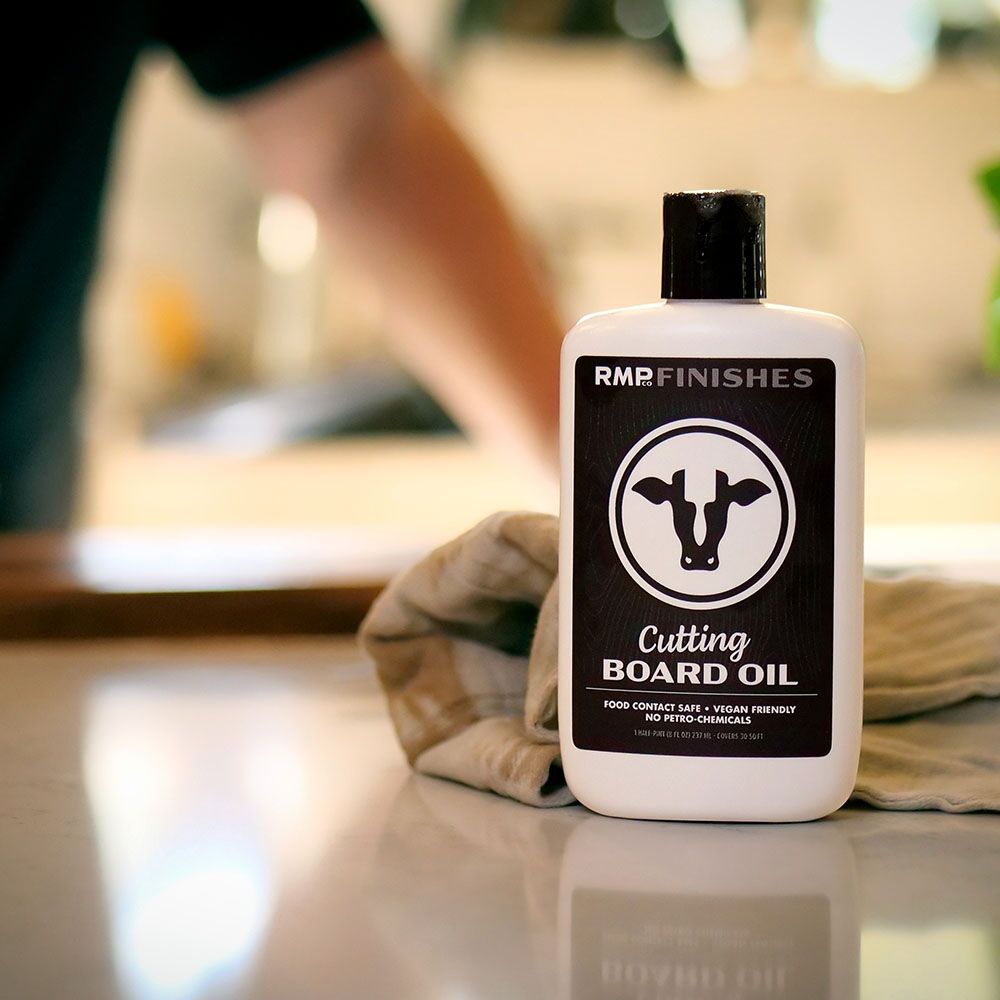
Organic Cutting Board Oil

From: $4.99

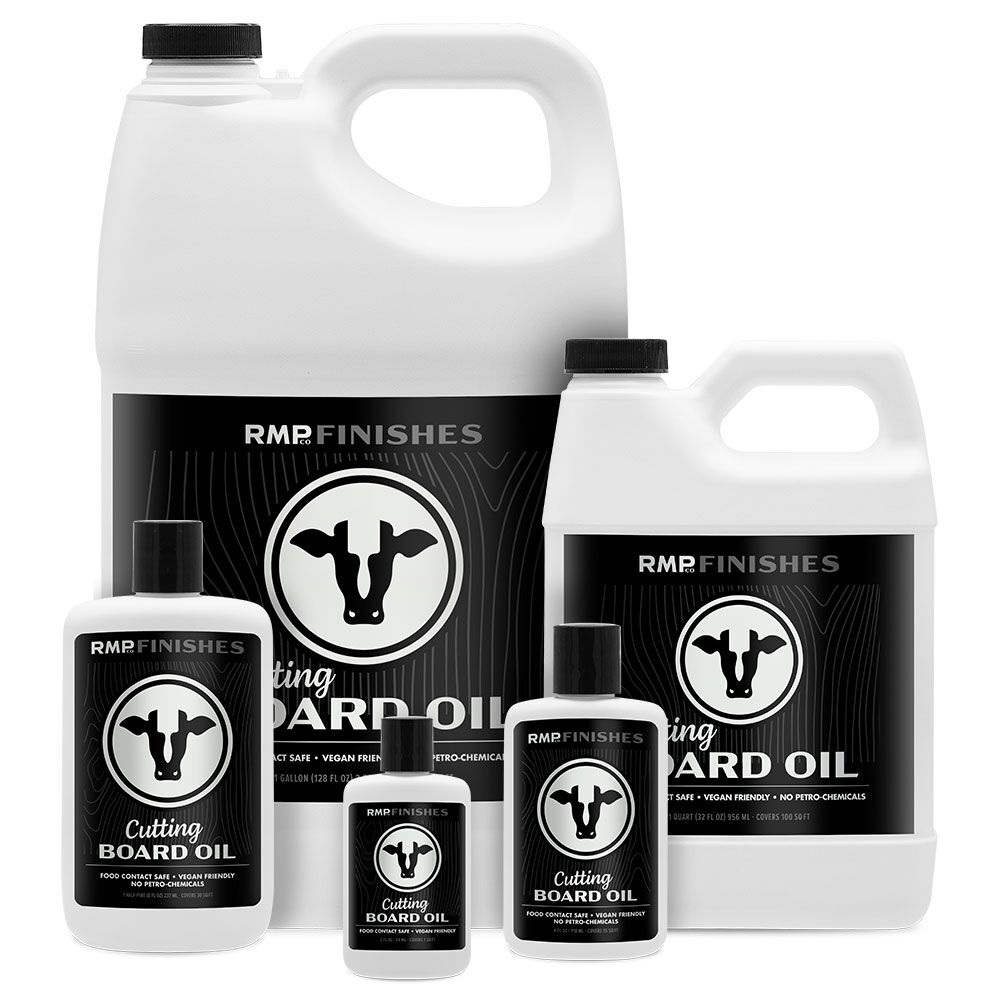
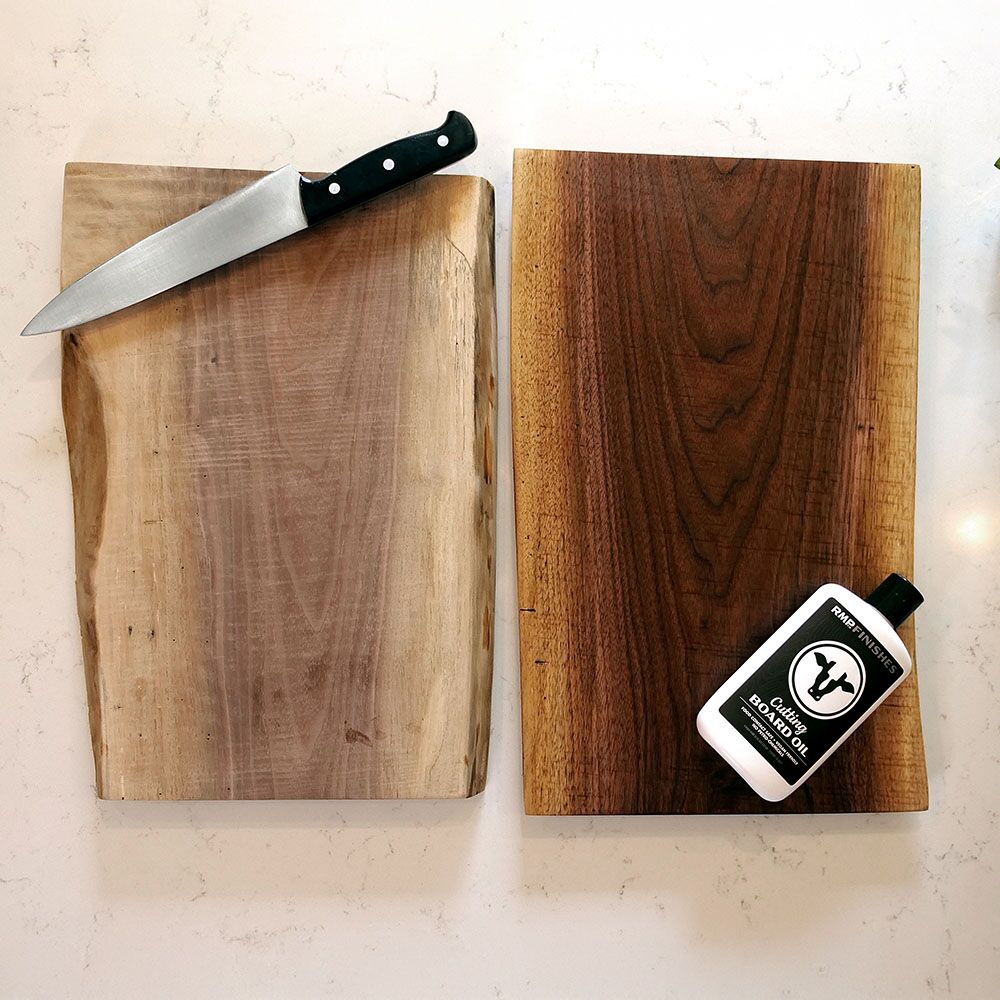
Keep your wooden cutting boards, bowls, utensils, and charcuterie boards in top condition with Cutting Board Oil from RMP Finishes.

Unlike most products made with petroleum-derived mineral oil, our formula is 100% plant-based. It penetrates deep into wood fibers to condition, seal, and protect, without the risk of rancidity or synthetic additives. 

Safe for food contact, easy to apply, and shelf-stable, this is the natural way to care for your kitchen essentials.

Available in case packs.

SKU: CBO Category: Tag: Brand:

Product Description

Best Organic Cutting Board Oil: Plant-Based Food-Safe Finish

Most cutting board oils rely on mineral oil or other petroleum byproducts. Not ours.

RMP Finishes’ Cutting Board Oil is 100% plant-based and food-safe, offering a clean, natural way to protect and condition your wooden cutting boards, bowls, utensils, and more.

Unlike common alternatives like vegetable or coconut oil, which can go rancid, this formula is designed for long-term use without compromising safety or sustainability.

The Safer, Plant-Based Alternative to Mineral Oil for All Your Wooden Kitchenware

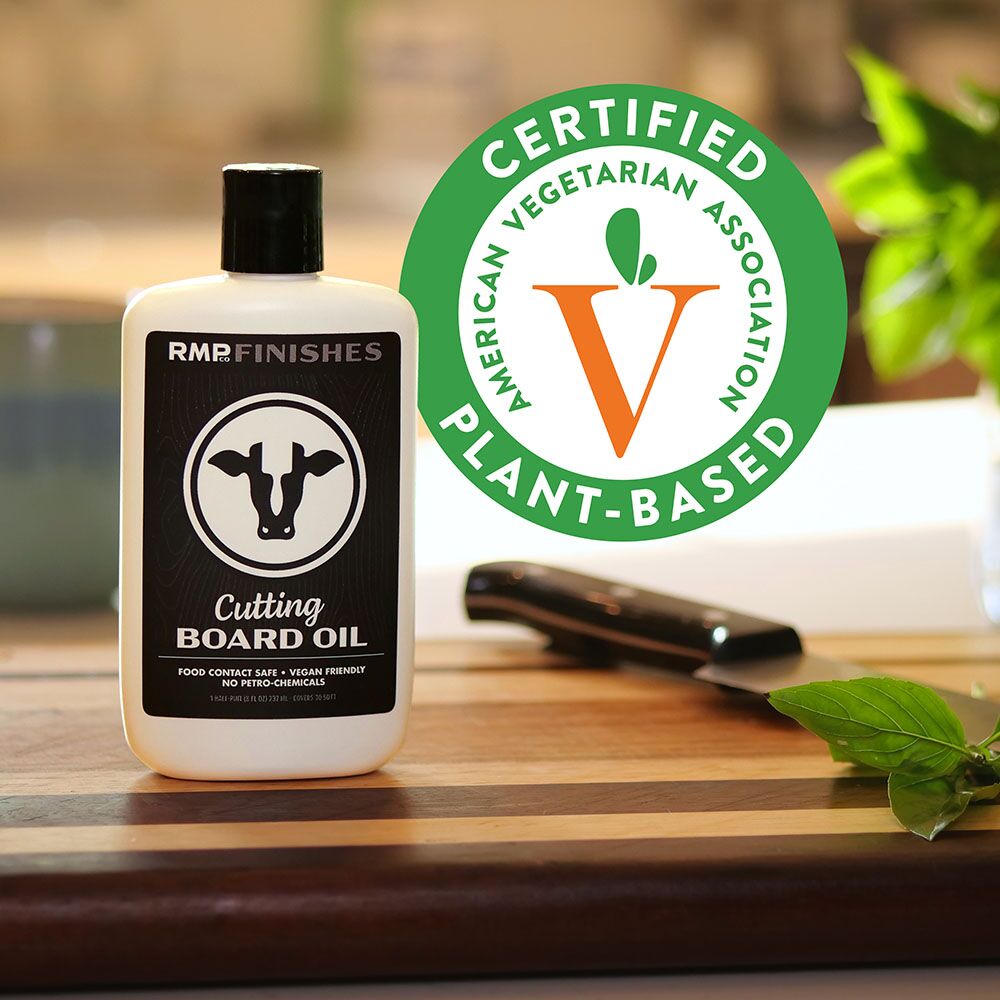
American Vegetarian Association Plant Based Certification Logo

Our Cutting Board Oil is certified as plant-based by the American Vegetarian Association.

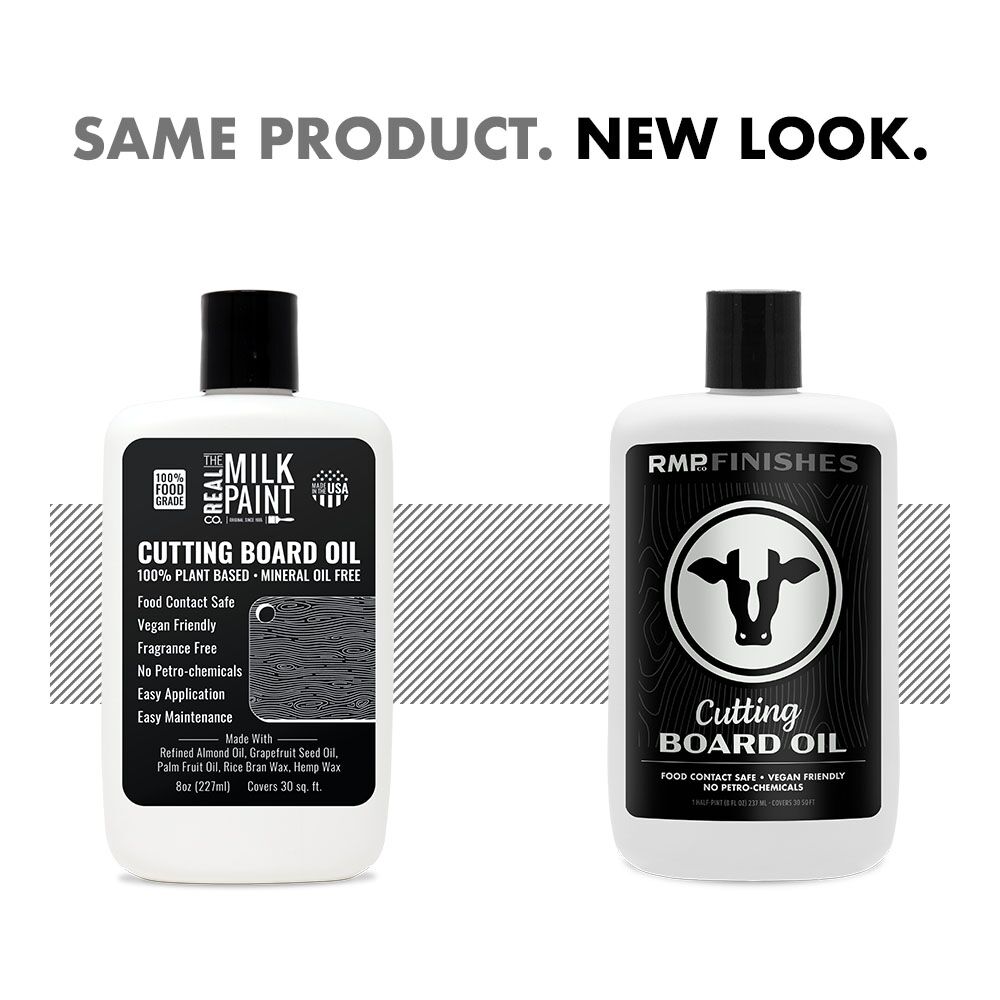
RMP Finishes’ Cutting Board Oil is made entirely from plant-based ingredients—no petroleum, solvents, or synthetic fragrances. Designed to penetrate deep into wood fibers, it nourishes and protects cutting boards, charcuterie boards, salad bowls, serving trays, and utensils of any wood species, including bamboo.

Unlike food-grade mineral oil or cooking oils like vegetable and coconut oil, our formula provides long-lasting protection using simple, organic ingredients:

  • palm fruit oil
  • refined almond oil
  • grapefruit seed oil
  • castor wax
  • rice bran wax.

It’s vegan, gluten-free, free of volatile organic compounds (VOCs), and safe for your family and the environment.

Our Cutting Board Oil is certified as plant-based by the American Vegetarian Association.

Our cutting board oil is more than just food-safe. It’s designed to extend the life of your wooden kitchenware with minimal effort. Here’s what sets it apart:

  • Safe & Eco-Conscious: Free from petroleum, solvents, fragrances, and VOCs.
  • Effortless Application: Just rub on and buff off—no curing or special tools required.
  • Deep Conditioning: Penetrates wood fibers to prevent cracking, drying, and warping.
  • Shelf-Stable & Rancid-Resistant: Won’t spoil like coconut or vegetable oils.
  • Versatile Use: Ideal for cutting boards, charcuterie boards, bowls, trays, and utensils.
  • Natural Finish: Enhances wood grain with a smooth, low-luster sheen.
  • Smart Packaging: Comes in BPA- and phthalate-free recyclable HDPE bottles.

Directions

Follow the steps below to get the most from your Cutting Board Oil.

  1. Ensure the wood surface being treated is clean and free of dirt or debris. If sanding is needed, sand until the desired smoothness is reached or until 320 grit.
  2. Shake the Cutting Board Oil bottle before pouring contents onto the surface. It’s best to apply the oil with an ambient room temperature of 65ºF or higher.
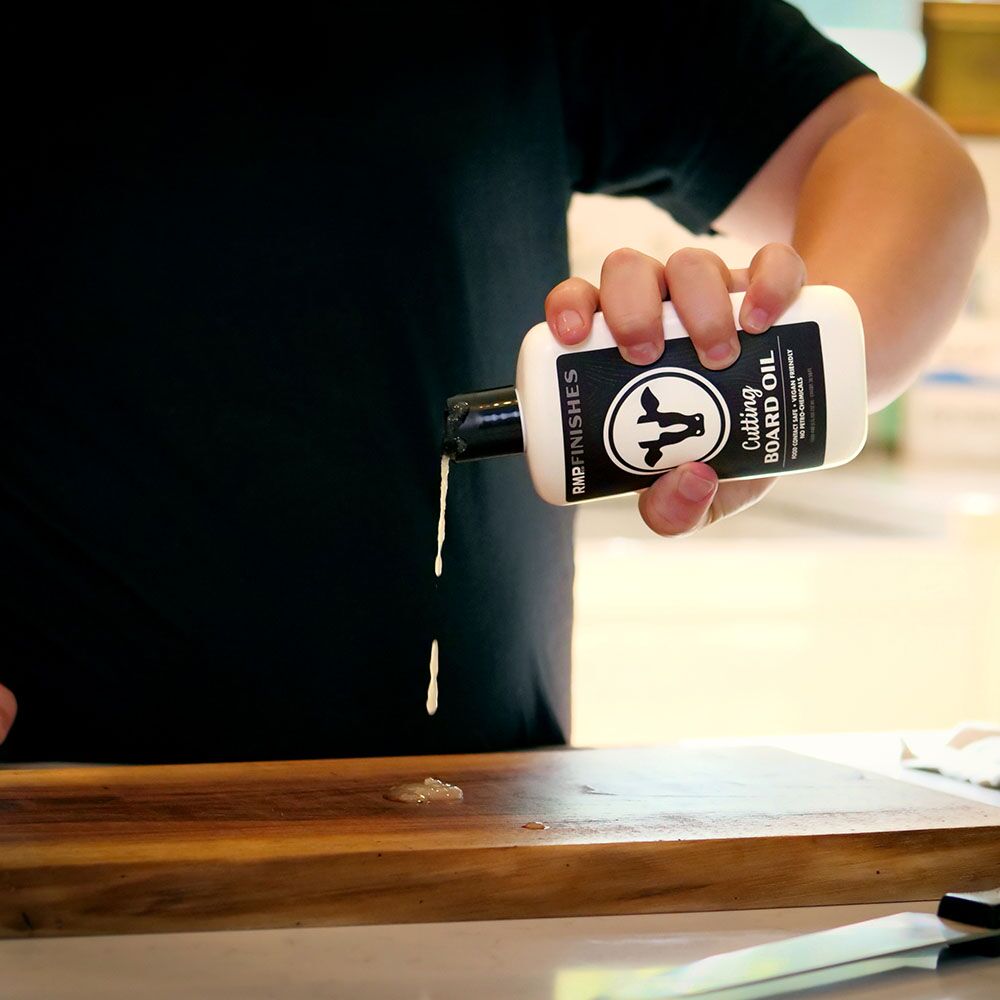
  3. Pour oil onto the surface. A little goes a long way!
  4. Rub oil across the surface by hand or with an applicator of choice, working it into the pores of the wood. Endgrain will absorb the oil more readily.
  5. Let the oil sit on the surface for a minimum of 10-15 minutes up to 24 hours at most.
  6. Buff the surface with a clean, lint-free cloth to remove excess and create a sheen.
  7. Enjoy your recently treated item!

4 oz bottle covers approximately 15 sq. feet.
8-oz bottle covers approximately 30 sq. feet.

Cleaning Treated Wood
Clean items treated with our organic cutting board oil using mild dish soap and warm water. Avoid harsh cleaners. After several washes, reapply oil to maintain protection.

Reapplying the Oil
When wood looks dry or loses its water resistance, it’s time for a touch-up.

  • Rub a small amount of oil onto the surface.
  • Let it absorb for a few minutes.
  • Buff off any excess with a clean cloth.

Storage & Usage Tips

  • Store the bottle in a cool, dark place.
  • Shake well before use, especially after storage.
  • For best results, apply at room temperature (65°F / 18°C or higher).
  • Discard after 3 years; empty contents into the trash and recycle the bottle.

Cold Weather Notice
The oil may thicken in cold conditions—this is normal. To restore flow:

  • Place the bottle in warm water (tap-hot is usually enough).
  • Let it sit for a few minutes until the oil returns to its original consistency.

Frequently Asked Questions

Yes, you can apply Cutting Board Oil over surfaces previously treated with mineral oil for a wood cutting board. Just make sure to clean the board thoroughly first using warm water and mild soap, or our Citrus Solvent to remove any residue and help the new oil absorb properly.

Yes. Cutting Board Oil works well on boards that combine wood and epoxy. It enhances the appearance of epoxy with a gentle sheen while deeply conditioning the surrounding wood surfaces for long-lasting protection and a refreshed, food-safe finish.

You can, but it’s not essential. Wood Wax gives a glossier, more durable finish and is better used on boards finished entirely with it. For easy maintenance, stick with Cutting Board Oil. For added protection and sheen, consider using Wood Wax from the start.

Cutting Board Oil is quick to apply and ideal for frequent reapplication. Wood Wax and Half & Half offer more durable finishes but require more prep and curing time. Choose oil for convenience, and wax or Half & Half if you want a longer-lasting, harder finish.

We don’t recommend it. Cutting Board Oil is made from non-drying oils, which don’t pair well with tung or hemp oils. However, you can apply Cutting Board Oil over fully cured tung or hemp finishes, as long as they’ve completely dried and hardened.

Yes, it’s made entirely from plant-derived ingredients and is certified 100% plant-based by the American Vegetarian Association. It’s vegan-friendly, eco-conscious, and contains no petroleum, solvents, or synthetic additives. Just safe, natural conditioning for your wooden kitchenware.

Refined almond oil is considered non-allergenic because it lacks the proteins that typically trigger allergic reactions. Still, we recommend checking with your healthcare provider before use if you or your family have known nut allergies or sensitivities.

Ingredients & SDS

There are many resources that promote and brands that use mineral oil as a sealant on cutting boards. After researching heavily into food-grade mineral oil, we decided to not use it in our cutting board oil. This section explains why.

Mineral oil is a product produced during the refining process of crude petroleum. As it is refined, different levels of mineral oil and other petrochemicals are filtered off. These levels of mineral oil fall under different grades and have various classifications. Crude petroleum is turned into things like gasoline, mineral spirits, and mineral oil. Untreated, or mildly treated mineral oils are classified as carcinogenic to humans (SourceSource) whereas highly treated mineral oil, what is considered food grade is “not classifiable as to its carcinogenicity to humans” by the International Agency for Research on Cancer (IARC) which is a group under the World Health Organization (WHO) (Source). This study was last conducted in 1984 (Source) with its findings confirmed most recently in 2012 (Source) With this in mind, we decided it would be better to not include a substance that changes in carcinogenicity depending on how it is refined. 

Oils become rancid over time when exposed to air, this process is known as oxidization. During the refinement process of food-grade mineral oil, vitamin E which is naturally found in mineral oil and aids resistance to oxidization, is removed. Thus, it is noted by the FDA that adding antioxidants such as vitamin E to help prevent oxidization (turning rancid) is allowed (Source).

Food Grade (white) Mineral Oil is classified as suitable to be used as a direct additive to food (Source) as well as indirect contact with food by the FDA (Source).  Food grade mineral oil is used widely in the processing, packaging, and preserving of food (Source). Therefore, it is widely present in our everyday lives from the products we use through contact or ingestion, meaning our exposure is more than what is taken intentionally. It is also used as a laxative when taken in higher doses by blocking the absorption of water in the intestines and if used for prolonged periods can reduce the absorption of essential vitamins and minerals for the human body. There is growing concern over the bioaccumulation of mineral oil hydrocarbons (MOH) in the body (lymph nodes, liver, spleen) and the toxicological effects of mineral oils found in food packaging and food. (SourceSourceSource) However, there are also conflicting opinions on which MOH are of concern and which are not.

In light of all this information and in an effort to provide an effective and affordable alternative to mineral oil, we decided to not use mineral oil in our Cutting Board Oil and instead choose to use plant-derived ingredients.

We carefully selected plant-derived ingredients that protect wood and keep your kitchenware safe for food contact:

  • Grapefruit Seed Oil – Rich in antioxidants with natural antifungal and antibacterial properties, helping boards resist mold and spoilage.
  • Palm Fruit Oil (RSPO-Certified) – Sustainable and high in vitamin E for added protection against drying and rancidity.
  • Refined Almond Oil – Deeply penetrates wood fibers for long-term conditioning while adding a light, natural scent. Highly refined to minimize allergen concerns.
  • Rice Bran Wax – Creates a subtle barrier against moisture and enhances the wood’s natural sheen.
  • Castor Wax – Plant-based wax with antimicrobial properties, offering durable protection without relying on beeswax or synthetic alternatives.

Together, these ingredients provide a safe, effective, and eco-conscious way to maintain cutting boards, bowls, utensils, and other wooden kitchen essentials.

Manufacturing Process

We use stainless steel manufacturing equipment to mix, heat, and dispense the oil. It goes from equipment where the raw ingredients are blended together directly into the final packaging. Once in the packaging, it is sealed. We make everything in small batches, so the product is “fresh”.

Ingredient Sourcing

  • Natural Origins: While we don’t want to giveaway ingredient sources, we do try to source as much from direct US-based sources. Not all ingredients are grown or manufactured here in the US, so some are imported. The big one to highlight is the palm fruit oil. Our is RSPO Certified, (Round Table Sustainable Palm Oil), meaning that the growth and harvesting of the palm fruit oil is monitored to ensure sustainable and ethical practices from field to factory.
  • Benefits: All of the ingredients we use in our Cutting Board Oil were extensively researched and thoughtfully selected. They are high in antioxidants, resisting going rancid and ensuring shelf stability. The waxes used, while less common, allowed us to maintain a vegan, gluten-free, and entirely plant-based finishing product.

Safety and Purity

  • Certifications: Our Cutting Board Oil is certified as a Plant-based product by the American Vegetarian Association. Also, all of the ingredients are recognized by the Food and Drug Administration (FDA) as safe for food contact.

Packaging

  • Eco-friendly Practices: The bottles are fully recyclable.